
Your customers are searching, watching, and scrolling right now.
The question is simple. Are you using the right campaign to reach them?
Google Ads is one of the most powerful paid advertising platforms today. It helps businesses reach the right audience, generate quality leads, and grow revenue.
It offers different campaign types. Each one is built for a specific goal. Some focus on awareness. Others drive conversions and sales.
When you match the right campaign with the right objective, results improve. Costs reduce. ROI increases.
Let’s break it down clearly and strategically.

What is Google Ads?
Google Ads is an online advertising platform where advertisers bid to display ads across Google’s ecosystem, including:
- Search results
- YouTube
- Websites in the Display Network
- Google Shopping
- Gmail
- Mobile apps
It operates primarily on a pay-per-click model, but also supports pay-per-impression and pay-per-lead formats.
It helps you attract high-intent users who are actively searching for products or services like yours.
With the right strategy, you can increase website traffic, generate more enquiries, and boost in-store visits. Over time, Google Ads also provides valuable data to analyze and optimize campaigns for better performance. A structured digital marketing course can give you the basic insights needed to understand and manage it effectively.
Types of Google Ads
Choosing the right campaign type can significantly impact your advertising results. Google Ads offers multiple ad formats, each designed for different goals such as brand awareness, lead generation, app installs, or online sales.
Understanding how each type works helps you invest your budget wisely and reach the right audience at the right stage of their journey.
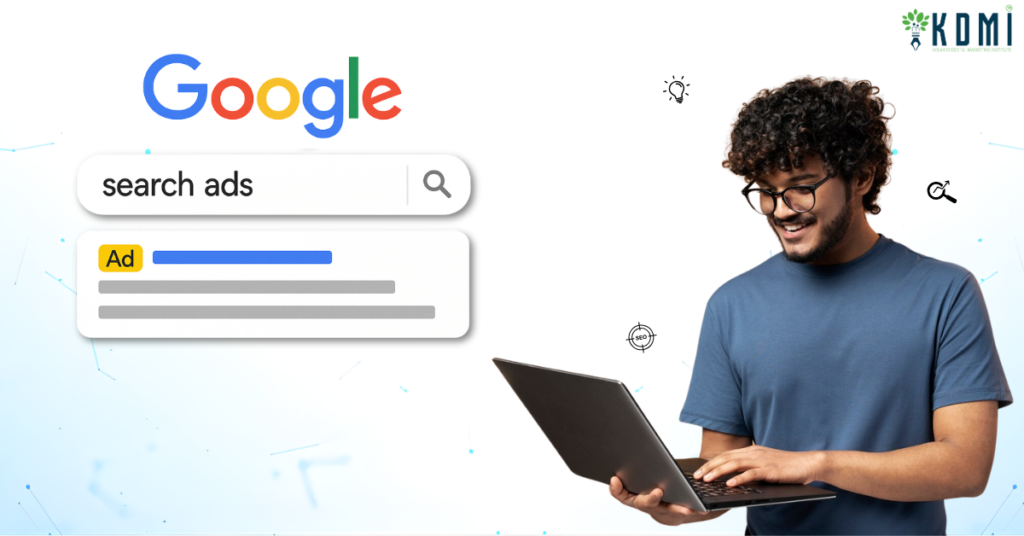
1. Search Ads
Search Ads are text ads that appear on top of Google search results when someone types a query. These ads are part of Google Ads and are commonly known as PPC ads because you pay only when someone clicks.
They appear directly inside search results on Google.
If someone searches “best digital marketing institute near me” and you run a training institute, your ad can appear at the top of the page. This is why Search Ads are powerful. They target people with active intent.
Where Do Search Ads Appear?
At the top and bottom of Google search results pages.
Best For
- Lead generation
- Service-based businesses
- Local businesses
- High-intent keywords
- Landing page promotions
If your goal is enquiries, calls, or form submissions, Search Ads are usually the first campaign type to consider.
Why Search Ads Work So Well
Search Ads target users who are already looking for a solution. You are not interrupting them. You are responding to their need.
This makes them highly targeted and cost-efficient when managed properly.
Key Features
- Text-based ads
- Triggered by real-time search queries
- Pay only when someone clicks
- Full control over keywords and budget
- Strong intent targeting
Best Practices for Search Ads Success
1. Choose the Right Keywords
2. Write Clear and Relevant Ad Copy
3. Optimize the Landing Page
4. Set a Clear Budget and Track Results
5. Use Ad Extensions
7. Test and Optimize Regularly
Step-by-Step: How to Create a Search Ads Campaign
- Select your campaign goal wisely.
- Choose your conversion action, such as phone calls or form submissions.
- Select a bidding strategy, like conversions or clicks.
- Set campaign settings, including location, language, and audience segments.
- Add relevant keywords.
- Write headlines and descriptions.
- Add extensions for better visibility.
- Set your average daily budget.
Launch. Monitor. Optimize.
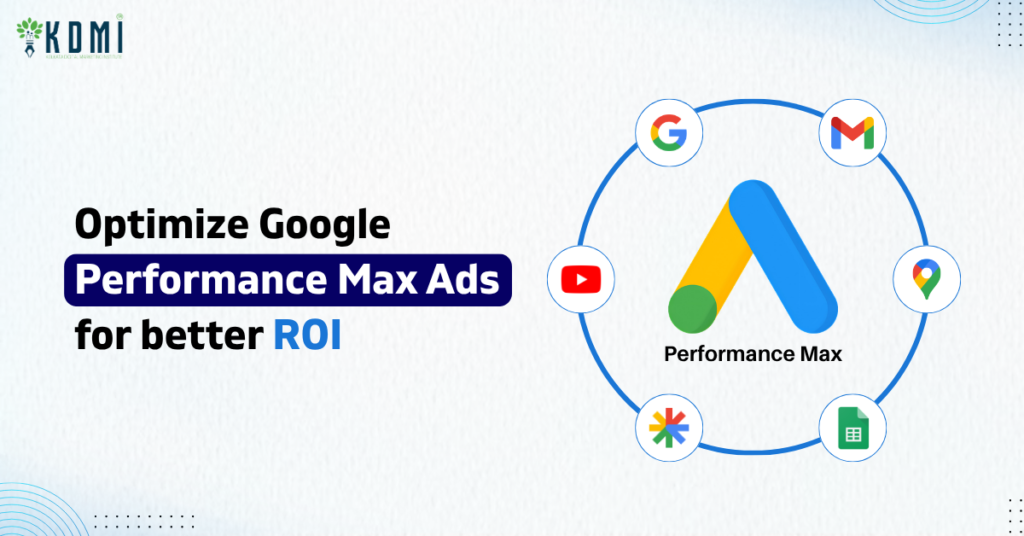
2. Performance Max Ads
Performance Max is a goal-based campaign type inside Google Ads.
It uses machine learning to show your ads across all Google properties from one single campaign. Instead of creating separate campaigns for Search, Display, YouTube, and Shopping, you manage everything in one place.
You focus on the goal. Google’s system focuses on finding the right audience and optimizing bids in real time.
What Makes Performance Max Different?
Traditional campaigns rely heavily on keywords and manual targeting.
Performance Max works differently. It uses:
- Your conversion data
- User behavior signals
- Audience inputs
- Creative assets
The system then decides where your ads should appear to maximize conversions or revenue.
It does not depend only on keywords. It studies patterns and learns who converts. Then it looks for similar users.
When Should You Use Performance Max?
Performance Max works best when:
- You already have conversion tracking set up
- You generate consistent conversion data
- You want to scale results across channels
- You run an e-commerce or lead generation business
If your account has very little data, results may take longer to stabilize.
How Performance Max Optimizes Campaigns
Once launched, the system continuously:
- Tests different asset combinations
- Adjusts bids based on the likelihood to convert
- Identifies new audience segments
- Shifts budget toward high-performing placements
This automation improves efficiency over time, especially when enough data is available.
Best Practices to Improve Results
1. Define One Clear Objective
2. Provide High-Quality Assets
3. Add Audience Signals
4. Ensure Accurate Conversion Tracking
How to Create a Performance Max Campaign
Here is the simplified process:
- Select Sales or Leads as your objective.
- Choose the primary conversion action.
- Select a bidding strategy, such as Maximize Conversions or Target ROAS.
- Set your daily budget.
- Adjust location and language settings.
- Upload assets such as headlines, images, logos, and videos.
- Add audience signals.
- Launch and allow time for the learning phase.
Avoid frequent changes during the first few weeks. Stability helps the system learn faster.
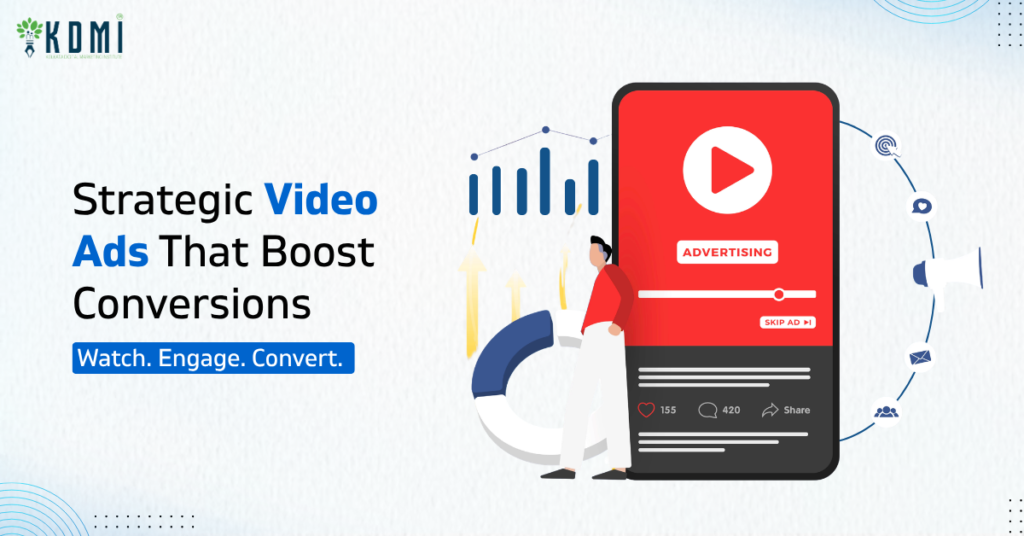
3. Video Ads
Video Ads inside Google Ads allow you to show ads across YouTube and Google’s video partner network.
They work like other campaign types. You choose your audience, location, budget, and bidding strategy. The difference is the format. Instead of text or images, you use video to communicate your message.
Video gives you more creative space. You can explain complex services, show product demos, build trust, and create an emotional connection. Some products cannot be fully explained with a single image. Video solves that problem.
It is also one of the strongest formats for brand awareness because YouTube reaches billions of viewers globally.
Where Video Ads Appear
Your ads can show:
- Before, during, or after YouTube videos
- In YouTube search results
- On the YouTube home feed
- Across Google video partners
- Inside apps and websites
This wide placement helps you reach users at different engagement levels.
Types of Google Video Ads
1. Skippable In-Stream Ads
2. Non-Skippable In-Stream Ads
3. In-Feed Video Ads
4. Bumper Ads
5. Outstream Ads
6. Masthead Ads
How to Choose the Right Video Ad Type
Your goal determines the format.
If your focus is reach and awareness, skippable in-stream ads work well.
Non-skippable or bumper ads may be better if you need guaranteed exposure for an important message. If you want users to actively click and watch, in-feed ads are a strong option.
Best Practices for High Performance
1. Focus on Storytelling
2. Add a Clear Call to Action
3. Target the Right Audience
4. Optimize for Mobile
5. Test and Improve
How to Create a Video Campaign
Here is the simplified process:
- Select a campaign objective such as Awareness, Leads, or Sales.
- Choose location, language, and bidding strategy.
- Define your audience and targeting options.
- Upload a video to YouTube or select an existing one.
- Add headlines, descriptions, call to action, and final URL.
- Set your budget and launch.
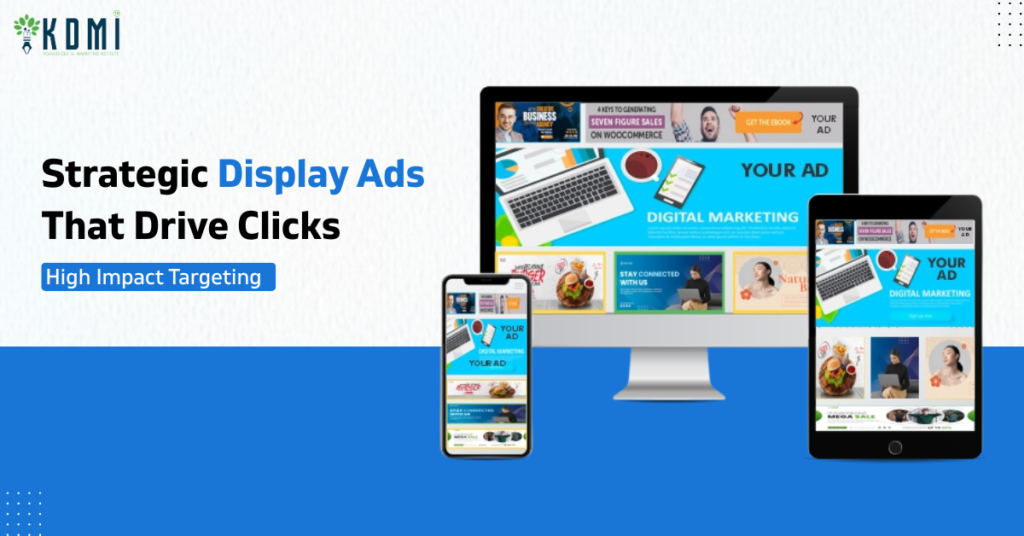
4. Display Ads
Display Ads are visual advertisements that appear across millions of websites, apps, and platforms within the Google Display Network.
They include banner ads, responsive image ads, and native-style placements that blend naturally into the content of a webpage.
Unlike Search Ads, which target active intent, Display Ads focus more on awareness and visibility. They help you stay in front of users while they browse content online.
How Display Ads Work
You can pay based on:
- Clicks
- Impressions
- Conversions
Targeting options allow you to show ads based on:
- Interests
- Demographics
- Browsing behavior
- Custom segments
- Website visitors (remarketing)
This makes Display powerful for both new audience discovery and retargeting.
Best For
- Building brand awareness
- Entering new markets
- Product launches
- Retargeting past website visitors
- Supporting full-funnel campaigns
Display campaigns work especially well when combined with Search or Performance Max strategies.
Best Practices for Better Performance
1. Use Strong Visuals
2. Keep Messaging Clear
3. Segment Your Audience
4. Optimize Continuously
How to Create a Display Campaign
Here is a simplified process:
- Select your campaign goal and the desired conversion action.
- Set location, language, and schedule.
- Select bidding strategy and daily budget.
- Choose targeting options or allow optimized targeting.
- Upload assets such as images, logos, headlines, and descriptions.
- Launch and monitor performance regularly.
Avoid making large changes during the initial learning period.
By now, you have a clear understanding of the different types of Google Ads discussed above.
At this point, a natural question might come to your mind: which one is actually the best?
Which Type of Google Ads Is Best?
There is no single best Google Ads campaign for every business.
The right choice depends on your goals and the audience you want to reach. For example, businesses focused on generating leads often prefer Search Ads. E-commerce brands usually benefit more from Shopping or Performance Max campaigns. If brand awareness is the priority, Display or Video Ads can be more effective.
Every campaign type has its own strengths and limitations. Real success comes from selecting the option that clearly aligns with your objective, budget, and growth stage.
Conclusion: Strategy First, Platform Second
Google Ads is not about running ads. It is about running the right ads with the right objective.
Search Ads capture demand.
Performance Max scales results using automation.
Video Ads build attention and trust.
Display Ads increase visibility and remarketing power.
Each campaign type plays a different role in your growth strategy.
The real ROI comes from clarity:
- Clear business goal
- Clear audience understanding
- Clear tracking and measurement
- Consistent optimization
When strategy leads and data guides decisions, performance improves naturally. Costs become more controlled. Conversions become more predictable.
Instead of asking, “Which Google Ads type is best?”
Ask, “Which campaign supports my goal at this stage of growth?”
That mindset shift is what turns advertising spend into measurable return.
Start with one focused objective.
Test strategically. Optimize consistently. Scale what works.
That is how Google Ads drives better ROI.

This guide explained everything clearly.
This is exactly what I was looking for.
This is a great strategic breakdown of the Google Ads ecosystem. It really highlights how important it is to match your campaign type to your specific business goals—like using Search for high-intent leads versus Video or Display for brand awareness.
I came across this while looking for some information, and I ended up reading the whole article. You explained everything in a way that’s easy to understand without making it feel too technical. It was actually a good read. Thanks for taking the time to put this together. Looking forward to reading more posts from your blog.